The Unspoken Reality: How Actor Penis Size Became a Taboo Hollywood Conversation
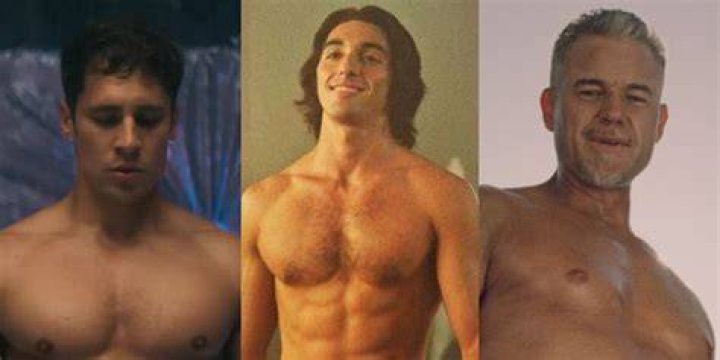
Hollywood has always been a factory of illusions. We see chiseled jawlines, perfect hair, and bodies that seem sculpted by the gods themselves. But beneath the surface of every shirtless scene, every steamy love sequence, and every nude moment, there lies a conversation the industry rarely wants to have. It is the quiet, often awkward, and deeply human reality of the actor penis.
Let’s be blunt. For decades, the size, shape, and appearance of a male actor’s genitalia have been a subject of whispered speculation, tabloid gossip, and intense personal anxiety. It is a topic that sits at the intersection of body image, masculinity, and the brutal economics of fame. And while the conversation has shifted in recent years, the pressure remains immense.
This isn’t about prurient interest. It’s about understanding the mechanics of an industry that sells fantasy. When a leading man drops his towel in a blockbuster, what are we actually seeing? The answer is rarely straightforward. It is a world of prosthetics, digital erasures, strategic angles, and, increasingly, the quiet work of intimacy coordinators who are rewriting the rules of on-screen nudity.
The Prosthetic and the Pixel: The Art of the Hollywood Illusion
For every actor who has bared all on screen, there is a team of professionals working overtime to manage perception. The most common tool in this arsenal is the prosthetic. Known colloquially as a "merkin" for men, or simply a "cock sock," these silicone creations are custom-molded to fit the actor and are used to create a specific look that the director—or the actor—desires.
Why use a prosthetic? The reasons are varied. Sometimes it is about modesty; the actor is comfortable with nudity but not with showing their own anatomy. Other times, it is about the character. A period drama might require a specific aesthetic that the actor doesn’t naturally possess. And in many cases, it is about the director’s vision of "ideal" masculinity, a standard that is often unrealistic and unattainable.
Then there is the digital realm. CGI has become the invisible hand of Hollywood modesty. In the age of high-definition streaming, a stray pixel can become a headline. Visual effects artists routinely "clean up" scenes, removing unwanted shadows, adjusting proportions, or even completely replacing an actor’s anatomy with a digital version. This is not a fringe practice; it is standard operating procedure for any production that features nudity.
The result is a paradox. Audiences are seeing more nudity than ever before, yet what they are seeing is often less real. The actor penis on screen is frequently a composite—a mix of the actor’s own body, a prosthetic, and a digital paint job. It is a manufactured reality designed to satisfy a cultural expectation that no real human being can meet.
The Double Standard: Why Men Face a Different Kind of Scrutiny
Hollywood has long been criticized for its treatment of female bodies. The scrutiny of an actress’s weight, age, and appearance is well-documented. But the pressure on male actors is different, and in some ways, more insidious. For women, the conversation often revolves around beauty and desirability. For men, it is about power and adequacy.
The size of an actor penis has become a shorthand for virility, dominance, and even talent. A leading man who is perceived as "small" is often seen as weak or comedic. This is not just a matter of locker-room talk; it has real career consequences. There are countless stories of actors who have lost roles or been subjected to humiliating contract clauses that dictate how they can be filmed.
Consider the infamous "fluffing" rumors that have plagued the industry for decades. The idea that actors are given specific instructions or even physical assistance to achieve a certain state before a nude scene is a persistent urban legend. While the reality is usually far less dramatic, the anxiety is real. The pressure to perform, both as an actor and as a man, creates a toxic environment where vulnerability is punished.
This double standard is also reflected in the way the media covers the topic. Tabloids and gossip sites have built entire business models around speculating about the size of famous men. A leaked photo or a grainy paparazzi shot can become a career-defining moment, often for the worse. The actor is reduced to a single physical attribute, their entire body of work overshadowed by a crude measurement.
The Rise of the Intimacy Coordinator: A New Era of Consent and Control
The #MeToo movement changed many things in Hollywood, but one of its most tangible impacts has been the normalization of intimacy coordinators. These professionals are now a standard fixture on sets that feature nudity or simulated sex. Their job is to choreograph scenes, ensure consent, and protect the actors’ boundaries.
For male actors, the intimacy coordinator has become a crucial ally in navigating the minefield of on-screen nudity. They help negotiate what will be shown, how it will be filmed, and what prosthetics or digital effects will be used. This has given actors a level of agency that was previously unheard of.
"It’s about taking the power back," says one veteran intimacy coordinator who spoke on condition of anonymity. "For years, male actors were told to just 'man up' and do the scene. They were humiliated, they were pressured, and they had no one to advocate for them. Now, we have conversations about what they are comfortable with. We talk about the actor penis as a part of their body, not as a prop."
This shift has also led to more honest conversations about body image. Actors are now more willing to speak publicly about their insecurities. They are pushing back against the idea that they must conform to a single, narrow standard of masculinity. The result is a slow but meaningful change in what audiences see on screen.
The Human Cost: Anxiety, Body Dysmorphia, and the Pursuit of Perfection
Behind the glamour, the pressure on male actors to conform to an ideal of physical perfection takes a heavy toll. Body dysmorphia is rampant. The constant comparison to digitally altered images and prosthetic-enhanced co-stars creates a distorted sense of self. Many actors develop deep-seated anxieties about their own bodies, anxieties that can persist long after the cameras stop rolling.
This is not a problem limited to A-list stars. Even character actors and supporting players feel the weight of expectation. A single nude scene can become a source of lifelong regret. The fear of being "found out" or "not measuring up" is a constant companion.
The industry is slowly waking up to this reality. There are now support groups and resources for actors dealing with body image issues. But the culture is slow to change. The same studios that preach body positivity are often the ones demanding that actors lose weight, gain muscle, and present a specific physical image.
The conversation about the actor penis is, at its core, a conversation about humanity. It is about the gap between the fantasy we consume and the reality of the people who create it. It is about the price of fame and the cost of perfection.
Beyond the Taboo: A Future of Honesty and Authenticity
So, where does the industry go from here? The trend is slowly moving toward greater authenticity. Streaming services and independent films are increasingly embracing natural bodies, including natural nudity. The demand for prosthetic perfection is being challenged by a growing appetite for realism.
Audiences are also becoming more sophisticated. The era of the "perfect" male body is fading. Viewers are more interested in compelling stories and relatable characters than in idealized physiques. This shift is giving actors the freedom to be themselves, without the pressure of a prosthetic or a digital paint job.
But the change is not complete. The tabloid culture that feeds on speculation is still alive and well. The double standard persists. And the anxiety that comes with baring it all—literally and figuratively—remains a very real part of the job.
Ultimately, the story of the actor penis is a story about power. It is about who controls the narrative, who sets the standards, and who pays the price. It is a story that Hollywood is only beginning to tell honestly. And as the industry continues to evolve, one thing is clear: the most powerful thing an actor can do is not to conform to an impossible ideal, but to be unapologetically human.